

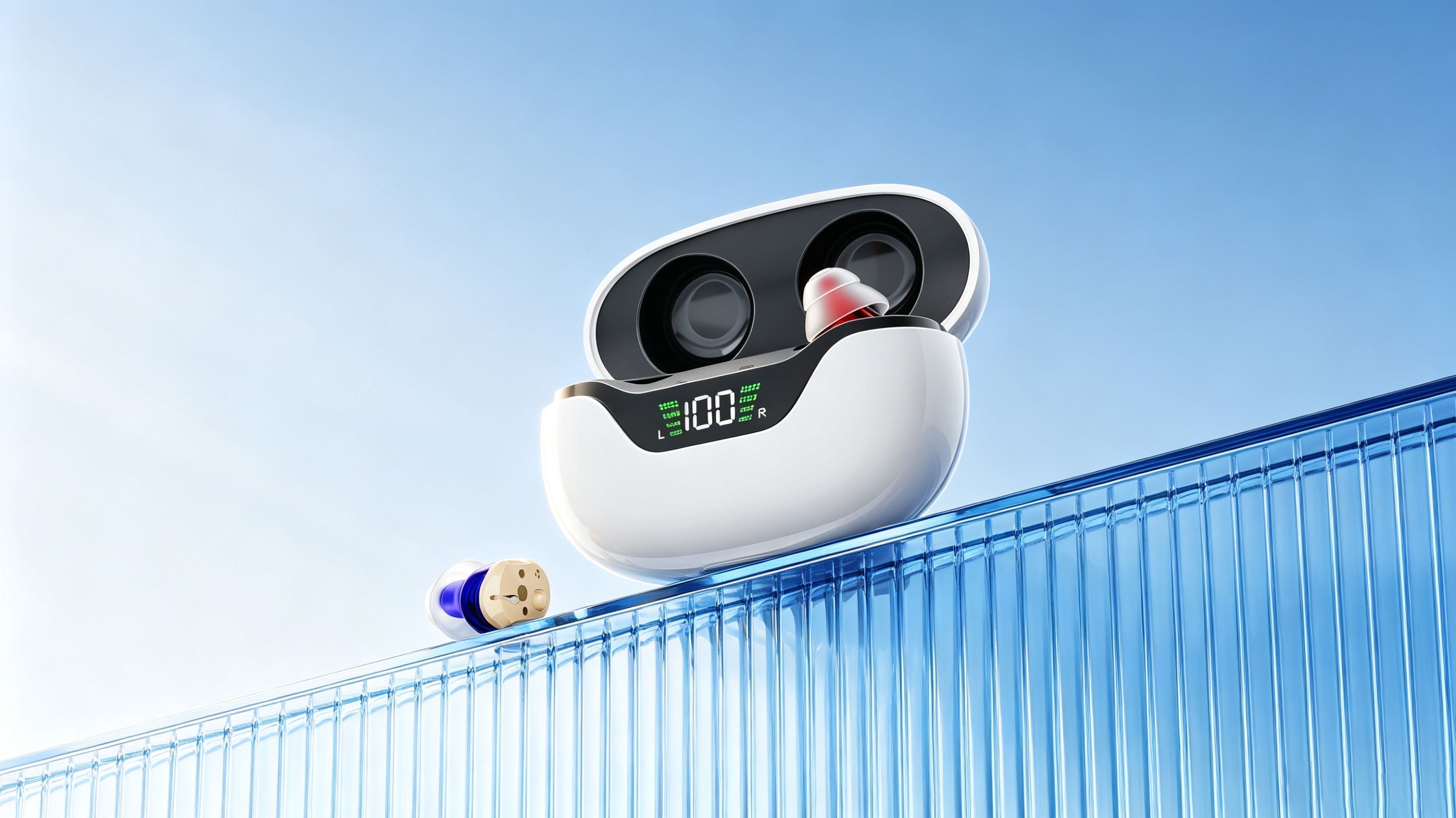
If you're researching discreet hearing aids, you've likely come across two styles that look similar at first glance: CIC (Completely-in-Canal) and ITC (In-the-Canal) hearing aids. Both fit inside the ear canal. Both are far less visible than behind-the-ear devices. So what's actually different between them — and which one is right for you?
This guide breaks down the key differences clearly so you can make an informed decision.
What Does CIC Mean?
CIC stands for Completely-in-Canal. A CIC hearing aid is custom-molded to fit entirely within the ear canal, sitting deep enough that only a small removal handle is visible from the outside. They are one of the smallest hearing aid styles available.
What Does ITC Mean?
ITC stands for In-the-Canal. An ITC hearing aid also sits inside the ear canal, but it's slightly larger and extends a bit further toward the outer ear. A small portion of the device is typically visible when looking directly into the ear.
CIC vs ITC: Side-by-Side Comparison
| Feature | CIC | ITC |
|---|---|---|
| Size | Very small | Small (slightly larger than CIC) |
| Visibility | Nearly invisible | Low visibility |
| Fit depth | Deep in canal | Partially in canal |
| Custom molded | Yes | Yes |
| Bluetooth | Some models | More commonly available |
| Volume control button | Rarely | Often included |
| Battery size | Very small (size 10) | Slightly larger (size 312) |
| Battery life | 3–5 days | 4–7 days |
| Hearing loss range | Mild – Moderate | Mild – Moderate to Severe |
| Best for | Maximum discretion | Balance of features + discretion |
Key Differences Explained
1. Size and Visibility
The most obvious difference is size. CIC hearing aids sit deeper in the ear canal and are smaller overall, making them the more discreet option of the two. ITC hearing aids are slightly larger — still very discreet compared to RIC or BTE styles, but a trained eye may notice them more easily than a CIC.
If your primary motivation for choosing an in-canal hearing aid is invisibility, CIC is the better choice.
2. Features and Technology
Because ITC hearing aids are slightly larger, they can accommodate more hardware. This translates directly into more available features:
- Bluetooth connectivity is more commonly found in ITC models
- Directional microphones (two microphones for better speech clarity in noise) are more feasible in ITC aids
- Manual volume controls or program buttons are more common in ITC aids
- Rechargeable batteries are more widely available in ITC models
CIC hearing aids can include some of these features, but the compact size limits what's technically possible.
3. Battery Life
ITC hearing aids generally have longer battery life than CIC aids, simply because the battery compartment is larger. CIC aids typically use a size 10 battery lasting 3–5 days, while ITC aids use a size 312 battery with a lifespan of 4–7 days.
This difference may seem small, but it adds up over months of daily wear.
4. Ease of Handling
CIC hearing aids are tiny. For most people with normal dexterity, this isn't a problem after a brief adjustment period. However, if you have arthritis, reduced finger sensitivity, or other dexterity challenges, the slightly larger ITC hearing aid may be significantly easier to insert, remove, and maintain.
5. Hearing Loss Range
Both styles are suitable for mild to moderate hearing loss. However, because ITC aids can accommodate slightly larger, more powerful components, some ITC models can also address moderately severe hearing loss — an area where CIC aids typically fall short.
6. Phone Use
Interestingly, CIC hearing aids often perform better during traditional phone calls. Because the device sits deeper in the ear canal, the microphone sits closer to the natural position your ear uses to receive sound — reducing the likelihood of feedback when you press a phone to your ear.
Which One Should You Choose?
Choose CIC if:
- Invisibility is your top priority
- Your hearing loss is mild to moderate
- You have good manual dexterity
- You don't need Bluetooth or advanced wireless features
- You speak on the phone regularly (traditional landline or speakerphone)
Choose ITC if:
- You want more features (Bluetooth, directional mics, app control)
- Your hearing loss is on the moderate to moderately severe end
- Longer battery life is important to you
- You want easier handling
- You want the option of rechargeable batteries
What About IIC (Invisible-in-Canal)?
If you want even more discretion than a CIC, there's a third option: IIC (Invisible-in-Canal) hearing aids. These sit even deeper in the canal than CIC aids and are truly invisible in most cases. However, they have the most limited features and smallest batteries of any hearing aid style. IIC aids are typically only appropriate for very mild hearing loss.
A Note on Custom Fitting
Both CIC and ITC hearing aids require a custom ear impression — a mold of your ear canal taken by an audiologist. This is what allows them to fit securely and comfortably. Unlike standard-fit RIC or OTC hearing aids that come in generic sizes, in-canal aids must be manufactured specifically for your ear.
This means both styles require a visit to a hearing care professional, and there will be a production lead time of typically 1–2 weeks after your ear impression is taken.
Summary
The difference between CIC and ITC hearing aids comes down to size versus features. CIC wins on discretion; ITC wins on functionality. Both are excellent options for mild to moderate hearing loss and both offer a far more discreet profile than behind-the-ear alternatives.
The best way to decide is to discuss your specific hearing needs, lifestyle, and priorities with a hearing care professional — and if possible, try both styles before committing.
Ready to explore in-canal hearing aids? Browse our CIC and ITC hearing aid
See also:
CIC Hearing Aids: Complete Guide
Are CIC Hearing Aids Comfortable?
Share:
CIC Hearing Aids: The Complete Guide
Are CIC Hearing Aids Comfortable? What to Expect