

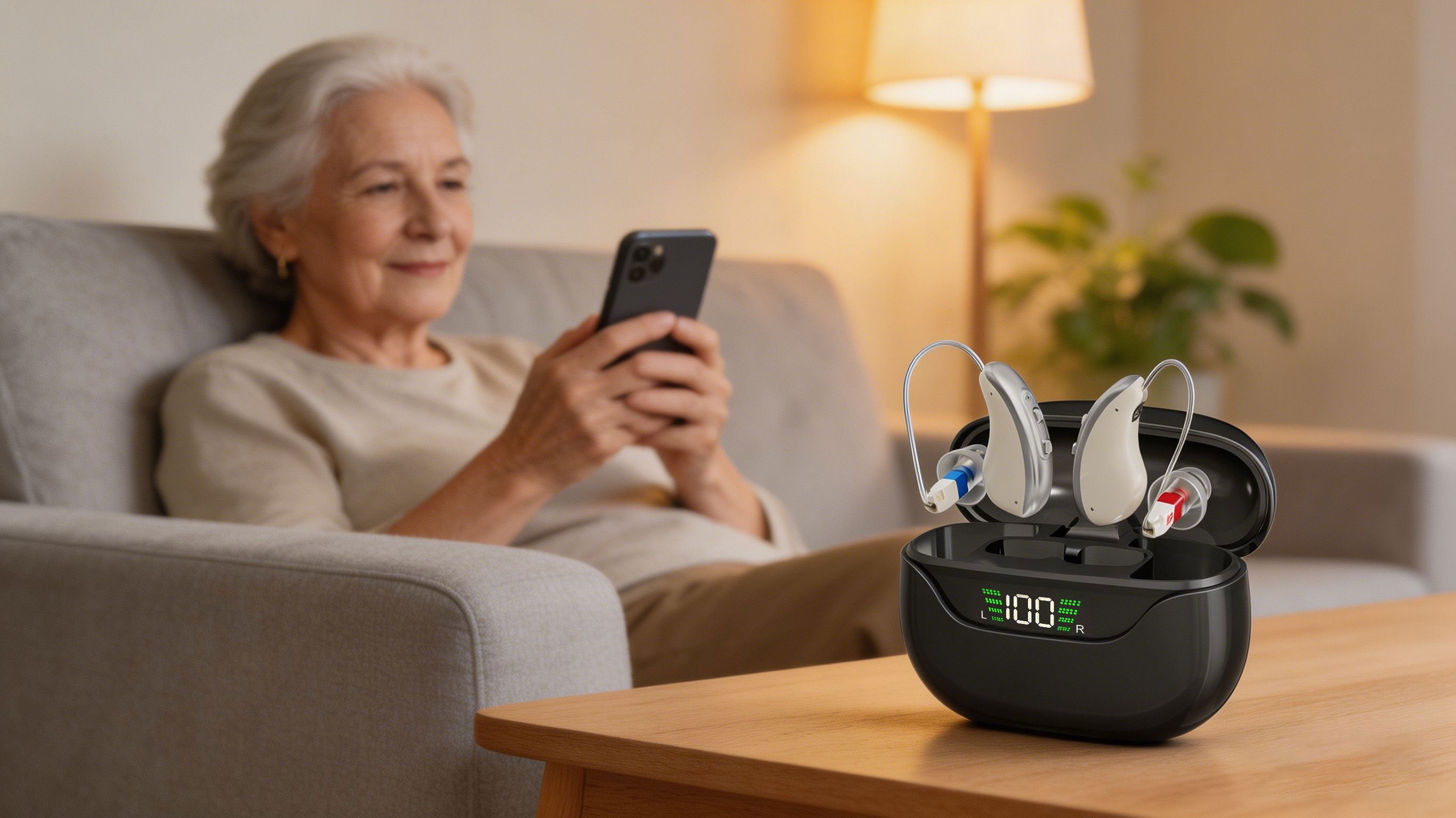
Can You Buy Hearing Aids Without a Prescription? (Yes — Here's What You Need to Know)
Yes — since October 2022, adults in the United States with mild to moderate hearing loss can legally buy hearing aids without a doctor's prescription, a hearing exam, or a visit to an audiologist. This is thanks to an FDA ruling that created an entirely new category of hearing devices: over-the-counter (OTC) hearing aids.
This is a significant change. For decades, hearing aids were only available through licensed hearing care professionals, putting them out of reach for millions of people — either because of cost, access to audiologists, or simply the friction of the process. OTC hearing aids changed that.
This article explains exactly how the no-prescription process works, what OTC hearing aids can and can't do, where to buy them, and what to watch out for.
The Law That Made This Possible
The Over-the-Counter Hearing Aid Act was passed by Congress in 2017 and directed the FDA to create regulations for a new class of consumer hearing aids. After several years of rulemaking, the FDA finalized the rule in August 2022, and OTC hearing aids became available to consumers on October 17, 2022.
The law was driven by a clear problem: hearing aids cost thousands of dollars, required multiple professional appointments, and weren't covered by Medicare. As a result, only about one in five Americans who could benefit from a hearing aid actually used one.
OTC hearing aids were designed to close that gap — especially for people with mild to moderate hearing loss, where the barriers to care were most disproportionate to the actual complexity of the solution needed.
What "No Prescription" Actually Means in Practice
Buying an OTC hearing aid without a prescription means:
- No doctor's visit required before purchase
- No audiologist appointment for fitting
- No hearing test required (though one is recommended)
- No waiting for approval from a healthcare provider
- Available online and shipped to your door, or available in pharmacies and electronics stores
You self-assess your hearing based on your own experience of symptoms. If you identify with signs of mild to moderate hearing loss — difficulty in noisy environments, asking people to repeat themselves, turning up the TV — you can proceed to purchase.
Who Can Buy OTC Hearing Aids?
OTC hearing aids are specifically approved for adults aged 18 and over with perceived mild to moderate hearing loss.
"Perceived" is the operative word — you don't need a formal diagnosis. If you believe your hearing loss falls in this range, you can buy OTC hearing aids.
You are likely a good candidate if:
- You can follow most conversations in quiet settings
- You struggle mainly in noisy environments, on the phone, or when you can't see the speaker
- People have to repeat themselves, but you're not completely missing conversations
- You've started turning up the volume on devices more than before
OTC hearing aids are NOT appropriate if:
- You are under 18
- You have severe or profound hearing loss (difficulty hearing even in quiet rooms)
- You have sudden hearing loss that appeared quickly
- You have hearing loss in only one ear, especially if accompanied by dizziness or tinnitus in that ear
- You have ear pain, drainage, or a history of ear surgery
In any of these situations, see a doctor or audiologist before purchasing any hearing device.
Where Can You Buy Hearing Aids Without a Prescription?
Online (Recommended for Most People)
Buying online gives you the widest selection, often the best prices, and the ability to compare trial periods and return policies side by side. Most reputable OTC brands sell directly through their websites and offer 30–75 day trial periods.
Buying directly from a brand's website (rather than a third-party marketplace) usually means better access to their customer support and easier returns.
Pharmacies and Drugstores
Major pharmacy chains carry OTC hearing aids. Selection is typically limited to a few models, and you won't get the guidance of brand-specific customer support. However, it's a good option if you want to see the device in person before committing.
Electronics Retailers
Some electronics retailers carry OTC hearing aids, particularly models from consumer technology brands. Again, selection is limited, but the in-store experience may be helpful if you prefer to hold and examine the device.
What to Avoid
Avoid purchasing hearing aids from:
- Unverified third-party marketplace sellers with no clear return policy
- Any seller who cannot confirm the device is FDA-registered
- Products marketed as "hearing amplifiers" or "PSAPs" — these are not FDA-regulated hearing aids and are not designed to treat hearing loss
The FDA Registration: Why It Matters
Not all amplifying devices sold as "hearing aids" are genuinely OTC hearing aids under the FDA definition. The FDA requires that true OTC hearing aids:
- Meet specific safety and effectiveness standards
- Include a clear label indicating they are for adults with mild to moderate hearing loss
- Have a stated return policy on the packaging
- Limit maximum output to protect against further hearing damage
- Include instructions and labeling in clear, consumer-accessible language
When shopping, look for language like "FDA-registered," "FDA-cleared," or "meets FDA OTC hearing aid requirements." If a product doesn't reference FDA compliance, it may be a PSAP (Personal Sound Amplification Product) — which is not regulated as a medical device and is not designed to treat hearing loss.
Do You Need a Hearing Test Before Buying?
Legally, no. Practically, getting a basic hearing screening before buying can be genuinely helpful.
A brief hearing test — even an online one — can help you understand which frequencies you're struggling with, which can help you choose the right device and settings. Self-fitting OTC hearing aids often include a built-in hearing test via their app, which approximates this process.
If you prefer a professional baseline, many audiologists offer hearing screenings (distinct from full diagnostic evaluations) for a lower cost. Some audiology clinics and community health organizations offer free screenings.
Keep in mind:
- An online hearing screening is a useful tool, not a clinical diagnosis
- A true audiogram (professional hearing test) remains the most accurate way to understand your hearing loss
- Some OTC brands offer remote audiologist consultations that can help interpret your results and optimize device settings
What Happens at Checkout — No Gatekeeping
Unlike prescription medications, there is no online form to fill out certifying your hearing status. No healthcare provider needs to approve your order. You add the hearing aids to your cart, check out, and they ship to your home.
Some OTC hearing aid companies use the checkout process to ask a few screening questions about your symptoms — not to gatekeep, but to help you confirm you're choosing an appropriate product. This is optional and self-reported.
The Return Policy: The Most Important Thing to Check Before Buying
Because you're self-selecting your device without professional guidance, the return policy matters more than almost any other factor.
Hearing aids take 4–6 weeks to properly evaluate — your brain needs time to adjust to amplified sound, and you need to test the device in multiple real-life environments (noisy restaurants, phone calls, TV, one-on-one conversations) before you can fairly judge its performance.
Look for:
- Minimum 30-day trial period — 45–60 days is better
- Full refund, not store credit
- Hassle-free return process
The FDA requires that return policies be clearly stated on OTC hearing aid packaging. Read this before purchasing — especially if buying from a retailer rather than directly from the brand.
What to Expect After You Buy
Days 1–3: Setup. Most self-fitting OTC hearing aids walk you through setup in their app — typically a brief tone test that calibrates the device to your hearing. Preset models require you to manually choose a program.
Week 1–2: Adjustment. New hearing aids sound different. Sounds you haven't heard clearly in years — background noise, your own footsteps, rustling paper — may seem loud or jarring. This is normal. Start wearing them for a few hours a day in quieter environments.
Week 3–6: Calibration. Gradually increase wearing time and test in more challenging environments. Use this period to fine-tune settings via the app (if applicable) and evaluate whether the device is genuinely improving your hearing in real situations.
After 6 weeks: Decision time. If you're experiencing clear benefit — following conversations more easily, less listening fatigue, less asking people to repeat themselves — keep them. If you're not finding meaningful benefit, it's time to either try a different OTC device or book a professional hearing evaluation.
Frequently Asked Questions
Is it safe to buy hearing aids without a prescription?
Yes, for mild to moderate hearing loss. FDA-registered OTC hearing aids are designed with output limits that prevent overamplification. The risk comes from buying non-FDA-regulated amplifiers that may expose your ears to harmful volume levels.
Can I buy OTC hearing aids in the UK or Europe?
OTC hearing aid regulations vary by country. The US FDA's 2022 ruling applies to the US market. In the UK and EU, hearing aid regulations are different — many devices that function similarly to US OTC hearing aids are available, but the regulatory framework is distinct. Check local regulations before purchasing.
What if I need hearing aids for both ears?
Most OTC hearing aids are sold in pairs. If your hearing loss is primarily one-sided, some brands offer single-unit purchases — but consult a healthcare professional for significant single-sided hearing loss, as this can have causes that need medical evaluation.
Are there OTC hearing aids for children?
No. OTC hearing aids are approved only for adults aged 18 and over. Children with hearing loss must use prescription devices fitted by an audiologist.
Can I get a receipt for insurance or tax purposes?
Yes. While most insurance won't cover OTC hearing aids, you can typically use FSA or HSA funds to purchase them. Request an itemized receipt from the seller and check with your FSA/HSA administrator for eligibility.
Looking for an FDA-registered OTC hearing aid with a generous trial period? We've got you covered — no prescription, no hassle.
→ Shop OTC Hearing Aids
Related reading:
- OTC Hearing Aids: The Complete Buyer's Guide
- OTC vs Prescription Hearing Aids: Which Is Right for You?
- Does Insurance Cover OTC Hearing Aids?
Share:
OTC vs Prescription Hearing Aids: Which Is Right for You?
CIC Hearing Aids: The Complete Guide